

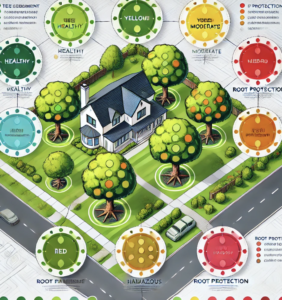
Every business with trees on (or near) its property is managing an asset and a liability at the same time. Trees create curb appeal, shade, customer comfort, and brand presence. They also carry real-world risk: falling limbs, root damage, blocked sightlines, storm exposure, tenant complaints, and insurance headaches. An Arborist Report is the document that turns “we think our trees are fine” into a defensible, professional, business-ready plan—one that protects your people and your bottom line.
An Arborist Report is not fluff. It’s an expert evaluation of tree health, risk, and recommendations, typically created by a qualified arborist. It can include a tree inventory, condition ratings, risk assessment, maintenance priorities, cost guidance, and mitigation steps. In other words: it’s a decision tool your leadership team, property manager, risk manager, insurer, and attorney can all rely on.
What an Arborist Report Actually Does for a Business (Beyond “Tree Care”)
A strong Arborist Report documents what you have, what condition it’s in, what could fail, and what should happen next—using a repeatable method instead of opinions. It helps you move from reactive cleanups to proactive planning, with a paper trail that stands up when money, safety, or legal responsibility is on the line.
It also sets a standard of care. If an incident occurs, the question is rarely “Did you love trees?” The question becomes: Did you take reasonable steps to identify hazards and act on them? A report shows that you did. It demonstrates that the business made informed decisions based on professional evaluation in the field of Arboriculture.
Risk Management and Liability: The Report That Can Save a Business Relationship (and a Lawsuit) ⚖️
A single tree-related incident can create a chain reaction: injury claims, vehicle damage, building impact, ADA access issues, and operational downtime. When that happens, documentation matters—especially proof that you inspected, prioritized, and maintained known risks.
An Arborist Report supports your defense by showing routine evaluation, identified risks, and recommended mitigations. It also helps your business avoid preventable disputes between landlords and tenants, neighboring properties, HOAs, municipalities, and utility providers. Even large insurers and courts have addressed how vegetation management and responsibility get argued after major losses, including litigation tied to wildfire damages. Reuters
Insurance, Climate Risk, and the “New Normal” for Property Costs 💼
Commercial property insurance has been under pressure, and extreme weather is one reason. Business outlets have increasingly focused on how physical risk is reshaping underwriting, premiums, and the added cost of prevention-focused evaluations. Bloomberg has reported that insurers are expanding into consulting-style services to help companies prevent losses tied to climate and physical risk. Bloomberg
An Arborist Report fits neatly into that prevention mindset. When your carrier, broker, or risk consultant asks what you’re doing to reduce property hazards, you’re not left saying, “We trim when it looks bad.” You can show an inspection record, prioritized recommendations, and maintenance cadence. That’s not just helpful—it’s credible.
Protecting the Property Itself: Roofs, Pavement, Drainage, Signage, and Customer Experience 🏢
Trees can quietly cost businesses money long before a limb ever falls.
Roots can heave sidewalks and parking lots, creating trip hazards and increasing maintenance costs. Canopies can block signage or lighting, reducing visibility and perceived safety. Leaves and debris can clog drains and create slippery surfaces. Poor placement or neglected structure can interfere with delivery lanes and emergency access.
An Arborist Report identifies these “slow-burn” cost leaks and gives you a prioritized, budgetable plan. It also helps you make smarter capital decisions: whether to prune, cable, treat, or remove—and when replacement planting is the better long-term investment. That’s how you stop paying for the same problems repeatedly and start managing the landscape like an asset.
Tenant, Investor, and Lender Confidence: Due Diligence That Feels Like Strong Operations
If you lease space, manage multi-site locations, or operate in a facility-heavy industry (retail, hospitality, medical, senior living, industrial), your exterior conditions affect stakeholder confidence. Tenants want safety and clean access. Investors want reduced operational risk. Lenders want predictable liabilities.
An Arborist Report supports:
-
Property condition assessments and site due diligence
-
Multi-site maintenance planning and vendor scope clarity
-
Lease conversations when exterior obligations are disputed
-
Capital planning for removals, replacements, and storm prep
It also aligns with a broader shift in how the market treats climate resilience and physical risk. The Financial Times has covered how catastrophe losses and risk realities continue influencing the insurance market and property economics—costs that ultimately touch businesses and their facilities. Financial Times
Compliance, Municipal Rules, and “Surprise” Penalties 🌿
Many business owners don’t realize how quickly tree issues can become regulatory or municipal issues—especially in cities with protected-tree ordinances, permitting requirements, and strict rules around removal. Ignoring those details can create delays, fines, or project shutdowns.
Recent reporting has highlighted how tree removal disputes can escalate into major financial penalties and prolonged legal conflict. San Francisco Chronicle An Arborist Report helps you stay ahead by documenting condition, risk, and justification—especially when permits or city review are part of the process.
It also supports safe-work planning. When crews are operating outdoors—maintenance, construction, parking lot work, deliveries—tree hazards are part of the environment. A report helps businesses reduce foreseeable hazards before they become incidents.
Storm Preparation and Business Continuity: Planning Beats Cleanup ⛈️
Storms don’t just knock limbs down. They disrupt operations, block entrances, damage vehicles, cut power, and turn a normal workday into a business interruption event. An Arborist Report identifies structural weaknesses, deadwood, included bark, cracked unions, root issues, and species-specific vulnerabilities—then ranks what matters most to address before the next weather event.
That matters because post-storm response is always more expensive than preventive pruning and targeted mitigation. And when storms hit, your business is competing with everyone else for cleanup crews, access, and scheduling. The report lets you act earlier, smarter, and with fewer surprises.
A Simple Bottom-Line Summary (What You’re Really Buying) ✅
When a business pays for an Arborist Report, it’s not “paying for a tree document.” It’s buying:
-
A safety and liability shield backed by professional evaluation
-
A maintenance plan you can budget and schedule instead of guessing
-
Stronger positioning with insurers, brokers, and risk partners
-
Better protection of buildings, pavement, drainage, and customer access
-
Documentation that reduces disputes with tenants, cities, and neighbors
-
A clearer path to protecting the value and function of the property
And it’s doing all of that while keeping the benefits trees bring to a business—beauty, shade, and a better experience for customers and staff 🌳✨
Conclusion
Trees are part of your business environment whether you manage them intentionally or not. The companies that win long-term are the ones that treat risk like a system, not a surprise. An Arborist Report turns tree management into a business decision: documented, prioritized, defensible, and aligned with the realities of modern property risk and insurance.
If your business has trees on-site, near parking areas, along walkways, over rooftops, or close to neighboring properties, an Arborist Report is one of the smartest protective steps you can take—because it safeguards people first, and profits right alongside them.