

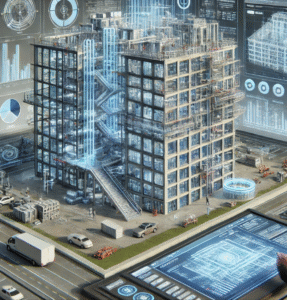
A New Era of Building Begins
In the ever-evolving world of architecture, engineering, and construction (AEC), staying ahead means leveraging smarter technologies and collaborative processes. One such transformative tool is BIM modeling—a cornerstone of modern construction that’s not only changing how buildings are designed but also how they are built, managed, and maintained. But what exactly is BIM modeling, and why has it become such a buzzword in the AEC community?
BIM, short for Building Information Modeling, is not merely 3D modeling software—it’s a data-rich digital process that brings together every stakeholder and phase of a construction project under one virtual roof. From the initial design concept to long-term facility management, BIM modeling creates a dynamic, detailed, and integrated representation of a physical space.
Whether you’re an architect looking to collaborate better with engineers, a contractor aiming to avoid costly errors, or an owner hoping for more control over your building’s lifecycle, BIM modeling offers a game-changing solution. Let’s break down this revolutionary approach and explore how it’s reshaping construction as we know it.
Understanding BIM Modeling: Beyond 3D 📊🏢
What Is BIM?
Building Information Modeling (BIM) is a process that involves the creation and management of digital representations of physical and functional characteristics of a building or infrastructure. These representations, called BIM models, are not just 3D geometric visuals—they embed data such as materials, costs, schedules, structural loads, HVAC specifications, and even energy performance.
Think of it as the digital twin of a real-world structure, where every brick, beam, pipe, and wire has associated data.
💡 Key Definition (Source):
According to the National Institute of Building Sciences, “BIM is a digital representation of physical and functional characteristics of a facility. It serves as a shared knowledge resource for information about a facility forming a reliable basis for decisions during its life cycle.”
A Collaborative Approach
BIM is collaborative by nature. It allows architects, engineers, contractors, and owners (AECO) to work on a shared model. Instead of siloed teams producing disconnected drawings, BIM lets everyone access and contribute to the same centralized model. This drastically reduces errors, rework, and miscommunication.
The Core Dimensions of BIM: 3D, 4D, 5D, and Beyond 📐🕒💰
BIM isn’t limited to a simple 3D representation. It scales in dimensions to offer deeper insights:
-
3D BIM: Visual representation (geometry, spatial relationships)
-
4D BIM: Adds time scheduling (construction sequencing)
-
5D BIM: Integrates cost estimation and budgeting
-
6D BIM: Focuses on sustainability and energy modeling
-
7D BIM: Concerns facility and asset management
Each new dimension adds layers of intelligence to the model, turning it into a powerful decision-making tool across the building’s lifecycle.
Why BIM Modeling Matters in Modern Construction 🏗️✨
1. Improved Accuracy and Visualization
Traditional 2D blueprints can be misinterpreted, leading to costly field errors. BIM enables teams to visualize designs in 3D, rotate objects, simulate sunlight, and walk through spaces virtually—before a single shovel hits the dirt. This enhances clarity for stakeholders and improves design intent communication.
2. Clash Detection
Ever experienced plumbing running through a beam? BIM helps identify clashes between systems (like mechanical and structural) before construction begins, saving thousands in change orders.
🚨 Software such as Navisworks is used for clash detection and coordination, making sure all systems integrate seamlessly.
3. Better Project Coordination
With a single source of truth, every professional—from architects to electricians—works from the same updated model. This ensures fewer discrepancies and real-time collaboration.
Tools like Revit, Tekla Structures, and Trimble Connect allow for multi-user environments and seamless data exchanges.
4. Cost and Time Savings
Through automation and foresight, BIM helps teams stay on budget and on schedule. 5D BIM, which incorporates cost data, allows stakeholders to assess the financial implications of design decisions early on.
⏱️ BIM supports Lean Construction principles, minimizing waste and maximizing value.
5. Lifecycle Management
One of the most undervalued aspects of BIM is its post-construction use. Facility managers can use the model to track maintenance schedules, energy usage, and system lifespans. This turns BIM into a long-term asset for building owners.
🛠️ The U.S. General Services Administration (GSA) mandates BIM for certain federal projects because of its value in operations and maintenance.
Who Uses BIM Modeling? 🧑💻👷♂️🏗️
Architects
Use BIM for design visualization, space planning, and aesthetic collaboration with clients.
Structural Engineers
Model reinforcement, loads, and material behaviors to optimize safety and performance.
MEP Engineers
Design and integrate mechanical, electrical, and plumbing systems to avoid clashes and maintain compliance.
Contractors
Plan construction phases, optimize logistics, and reduce change orders with accurate data and sequencing.
Facility Managers
Manage assets, schedule maintenance, and track building performance with rich model data.
Popular BIM Tools and Software 🧰💻
| Software | Use Case |
|---|---|
| Autodesk Revit | Architectural, MEP, and structural modeling |
| Navisworks | Clash detection and project coordination |
| ArchiCAD | Architectural BIM modeling |
| Tekla Structures | Structural steel and concrete modeling |
| BIM 360 | Cloud-based collaboration and document control |
| Vectorworks | BIM for architecture and entertainment |
Many of these tools integrate via IFC (Industry Foundation Classes) and openBIM standards, promoting interoperability across platforms. Check out buildingSMART for more info on open standards.
Common BIM Misconceptions Debunked 🧐🚫
1. BIM is just 3D modeling.
Not true! While 3D visuals are part of it, BIM also includes time (4D), cost (5D), and data for facilities (7D).
2. BIM is only for large projects.
Wrong again. Even small residential projects benefit from improved coordination and efficiency through BIM.
3. BIM replaces professionals.
BIM enhances what AEC professionals do. It’s a tool—not a replacement for expert insight and human creativity.
4. BIM is only for design phases.
Nope. It’s used through construction, handover, and long-term operations.
How BIM Modeling Impacts Sustainability 🌱🏢
One of the most exciting aspects of BIM is its role in green building and sustainability. Through energy modeling and life cycle analysis, architects and engineers can:
-
Simulate sunlight and shading to optimize daylighting 🌞
-
Analyze HVAC system efficiency
-
Choose sustainable materials with low environmental impact
-
Track carbon footprint over the building’s lifecycle
💡 Tools like Autodesk Insight offer real-time energy performance analysis integrated with BIM environments.
The Future of BIM: What’s Next? 🚀🔮
As BIM continues to evolve, we’re entering an era where it intersects with other technologies:
-
AI & Machine Learning will automate clash detection and predictive maintenance.
-
Digital Twins will mirror real-time building performance and integrate with IoT devices.
-
AR/VR will allow immersive design reviews and on-site guidance.
-
Blockchain may secure BIM data and smart contracts in the AEC space.
The convergence of BIM and smart tech paves the way for smarter cities, greener buildings, and more efficient construction workflows.
Conclusion: Building Smarter, Together 🧱🤝
So, what is BIM modeling?
It’s a paradigm shift—a move from disconnected design and construction processes to a fully integrated, collaborative, and data-rich environment. BIM modeling bridges the gap between concept and construction, empowering teams to work smarter, reduce waste, save money, and create better buildings.
Whether you’re a solo architect designing dream homes or a national contractor overseeing high-rises, BIM gives you the edge to lead in today’s competitive construction landscape.
🏗️ Embrace BIM, and you’re not just building structures—you’re building the future.