

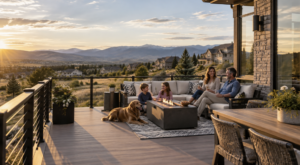
Colorado homeowners have always had a strong connection to the outdoors, but the way they use their properties is changing. In Parker and throughout Douglas County, outdoor areas are increasingly being treated as functional extensions of the home rather than secondary spaces used only during warm weather. One of the clearest signs of that shift is the growing demand for professionally designed custom decks.
A well-planned deck can create room for outdoor dining, entertaining, grilling, relaxing, and enjoying Colorado’s scenery without expanding the home’s enclosed footprint. For homeowners who already appreciate Parker’s combination of residential neighborhoods, open space, sunshine, and access to the Front Range, the appeal is easy to understand.
The trend also reflects broader changes taking place in Colorado construction. Homeowners are placing greater value on improvements that provide everyday usefulness while complementing the architecture of the property. Instead of viewing a deck as a basic platform attached to the back of a house, many are approaching it as a permanent component of the home’s design.
🏡 Outdoor Living Is Becoming Part of Residential Construction
Outdoor living areas have gradually become more sophisticated. A simple pressure-treated deck with a railing may still serve some households, but homeowners now have access to designs that incorporate multiple elevations, integrated seating, privacy elements, lighting, shade structures, cooking spaces, stairs, and transitions into landscaped areas.
This makes deck construction increasingly similar to other substantial home improvement projects. The design has to work with the structure of the house, the grade of the property, drainage patterns, access points, and surrounding landscaping.
That broader planning approach fits well with Colorado lifestyles. According to Colorado State University Extension, successful outdoor-space planning begins with site analysis and an understanding of how homeowners intend to use the property. The organization also encourages designing outdoor areas as functional spaces rather than treating patios, lawns, gardens, and other features as unrelated parts of the yard.
For Parker homeowners, a custom deck can serve as the element that connects those different areas together. It can provide a comfortable transition from the interior of the home to a yard, garden, fire feature, outdoor kitchen, or lower patio.
🔨 Parker’s Construction Standards Make Professional Planning Important
Deck construction is not simply a matter of purchasing lumber and choosing a layout. Parker has established building requirements intended to protect property owners and ensure construction meets applicable safety standards.
The Town of Parker Building Division administers building permits, conducts plan reviews, and enforces adopted building, fire, plumbing, mechanical, and electrical codes. Parker also moved forward with adoption of the 2024 International Codes, with full enforcement scheduled to begin June 30, 2026.
Local requirements are particularly relevant to deck projects. The Town of Parker states that permits are required for decks regardless of their height or size. Its building permit information also explains that plan submittal is required for deck construction, although certain projects may qualify for exemptions depending on the circumstances.
Permitting matters because a deck carries people, furniture, grills, planters, and sometimes additional structural features. Footings, posts, beams, joists, ledger connections, stairs, guards, and railings all contribute to the performance of the finished structure.
For homeowners searching for a Parker Deck Builder Near Me, knowledge of local permitting and construction requirements can be just as important as choosing the appearance of the finished deck.
☀️ Colorado Weather Influences Deck Design and Material Choices
Decks in Colorado face conditions that can be very different from those experienced in milder parts of the country. Strong sunshine, low humidity, temperature changes, wind, snow, and seasonal storms can place significant demands on exterior building materials.
Historical weather information maintained by the National Oceanic and Atmospheric Administration demonstrates the extensive range of climate observations collected across Colorado. Those conditions are more than interesting weather statistics when exterior construction is involved. They influence how materials expand, contract, fade, dry, and age over time.
Colorado State University Extension has also noted the state’s high-intensity sunlight, low humidity, temperature extremes, wind, and difficult growing conditions when discussing the challenges of maintaining Colorado landscapes. Those same environmental factors help explain why durable materials and thoughtful construction details matter in outdoor residential projects.
Composite decking has consequently become attractive to homeowners who want reduced maintenance and resistance to some of the issues associated with natural wood. Wood remains popular as well, particularly when homeowners prefer its traditional appearance and are prepared for periodic cleaning, sealing, staining, or refinishing.
There is no single material that is automatically right for every Parker home. Exposure to sunlight, elevation of the deck, architecture, budget, maintenance expectations, and desired appearance all influence the decision.
🌲 Decks Are Becoming Part of the Larger Landscape Design
One reason custom decks are gaining attention is that homeowners increasingly want the entire backyard to feel coordinated.
A deck may be designed to lead directly into a patio or garden rather than ending abruptly at a staircase. Wide steps can help create a natural visual transition between elevations. Built-in planters can connect the structure to surrounding landscaping, while designated areas for outdoor furniture can make the space feel intentional rather than improvised.
Colorado State University Extension’s guidance on sustainable landscaping notes that recycled plastic materials may be appropriate for decking and fencing and encourages property owners to select materials and landscaping elements that suit Colorado’s environmental conditions.
This broader approach to outdoor design can be especially effective in Parker, where residential lots vary considerably. Some homes have relatively level yards, while others benefit from elevated decks or multi-level construction because of changes in grade.
Instead of trying to force the same deck design onto every property, custom construction allows the structure to respond to the lot itself.
🔥 Fire Awareness Is Influencing Colorado Exterior Construction
Wildfire awareness has become increasingly important throughout Colorado, particularly where residential development meets open space and natural vegetation.
Decks are relevant to this discussion because they are physically attached to, or located immediately beside, the home. Colorado State University Extension’s fire-resistant landscaping guidance specifically identifies decks and fences among the attached structural elements that should be considered when evaluating a home’s susceptibility to wildfire ignition.
That does not mean homeowners need to abandon outdoor structures. It means thoughtful design, material selection, vegetation management, and routine maintenance deserve greater attention.
Leaves and other combustible debris can accumulate beneath or beside decks. Landscaping can grow against structural components. Storage areas beneath elevated decks can also become cluttered over time. Incorporating maintenance access and considering the surrounding landscape during the design stage can help homeowners manage these issues more effectively.
As construction practices continue evolving across Colorado, exterior projects are increasingly being considered as part of the home’s overall resilience rather than as isolated cosmetic improvements.
📈 Colorado’s Housing Market Supports Continued Home Improvement
Colorado has a substantial residential housing base, making renovation and improvement an important part of the state’s construction industry.
The U.S. Census Bureau estimated that Colorado had more than 2.7 million housing units by July 2025, with an owner-occupied housing rate of more than 66 percent during the 2020–2024 measurement period. The Census Bureau also reported a median value of owner-occupied housing units exceeding $539,000 for that period.
The federal government’s Building Permits Survey continues to track residential construction activity at national, state, county, metropolitan, and local levels, providing an important measure of ongoing housing development.
For homeowners who plan to stay in their properties, improvement projects can make an existing home better suited to changing needs. Families may want more entertaining space. Homeowners working remotely may place greater importance on pleasant outdoor areas. Others may simply want to take greater advantage of Colorado’s sunny days and mountain-region lifestyle.
A custom deck addresses those priorities without requiring the expense and disruption associated with constructing a fully enclosed addition.
⛰️ Colorado’s Geography Helps Explain the Outdoor-Living Appeal
Colorado’s landscape plays a significant role in the popularity of outdoor construction.
The state’s geography includes mountains, high plains, mesas, forests, canyons, plateaus, and river environments. As the general geographic overview of Colorado on Wikipedia reflects, the state contains much of the Southern Rocky Mountains while also extending across portions of the Great Plains and Colorado Plateau.
Parker sits along Colorado’s Front Range urban corridor, where residents can enjoy suburban amenities while remaining connected to the landscape that makes the state distinctive.
A deck provides a simple way to make that environment part of daily life. Morning coffee outdoors, evening meals, weekend gatherings, container gardening, or simply having a comfortable place to sit outside can turn an otherwise underused portion of the property into one of its most frequently enjoyed spaces.
That helps explain why outdoor construction is moving beyond basic utility. Homeowners are increasingly willing to invest in the quality, appearance, and longevity of these areas.
🛠️ Custom Design Allows the Deck to Match the Home
One of the biggest differences between a basic deck and a custom deck is how closely the finished structure relates to the home.
Proportions matter. A deck that is too small for a large home can look like an afterthought, while an oversized structure can overwhelm the yard. Railing styles, board direction, stairs, trim details, and material choices can all influence whether the deck appears original to the house or obviously added later.
Modern Parker homes may benefit from clean lines and understated railings. More traditional properties may call for warmer materials and architectural details that complement the existing exterior.
Function should guide those decisions as much as appearance. A homeowner who regularly entertains may need separate dining and seating zones. A family may prioritize open space and safe stairs. Someone interested in an outdoor kitchen may require a layout designed around cooking equipment and traffic flow.
Custom construction makes it possible to consider these needs before work begins rather than trying to accommodate them after the structure has already been built.
🏘️ Deck Construction Reflects a Larger Colorado Housing Trend
The growing popularity of decks represents something larger than a preference for outdoor furniture and backyard entertaining. It reflects a shift in how homeowners define usable living space.
Interior square footage will always matter, but homeowners are increasingly looking beyond the walls of the house. Patios, decks, porches, gardens, shade structures, and outdoor kitchens can all contribute to how a property functions.
In Parker, where Colorado’s climate, scenery, residential growth, and outdoor culture come together, custom deck construction fits naturally into that evolution.
The best projects are not simply larger versions of traditional decks. They are planned as permanent improvements that account for architecture, local construction requirements, climate, materials, landscaping, safety, and the way the homeowner intends to use the space.
Conclusion
Custom decks are becoming a must-have feature for many Colorado homeowners because they combine practical living space with the outdoor lifestyle that attracts people to communities such as Parker in the first place.
The trend also demonstrates how residential construction continues to evolve. Today’s deck can function as a dining room, gathering place, relaxation area, landscape transition, and architectural feature at the same time.
Parker’s permitting requirements and modern building standards make proper planning increasingly important, while Colorado’s sun, temperature changes, wind, snow, and fire considerations reinforce the value of selecting appropriate materials and construction methods.
As homeowners continue investing in their properties, the backyard is no longer being treated as leftover space. It is becoming an important part of the home itself. For Parker’s construction industry, that shift is likely to keep custom deck design and outdoor living at the center of residential improvement for years to come. 🏡🔨